
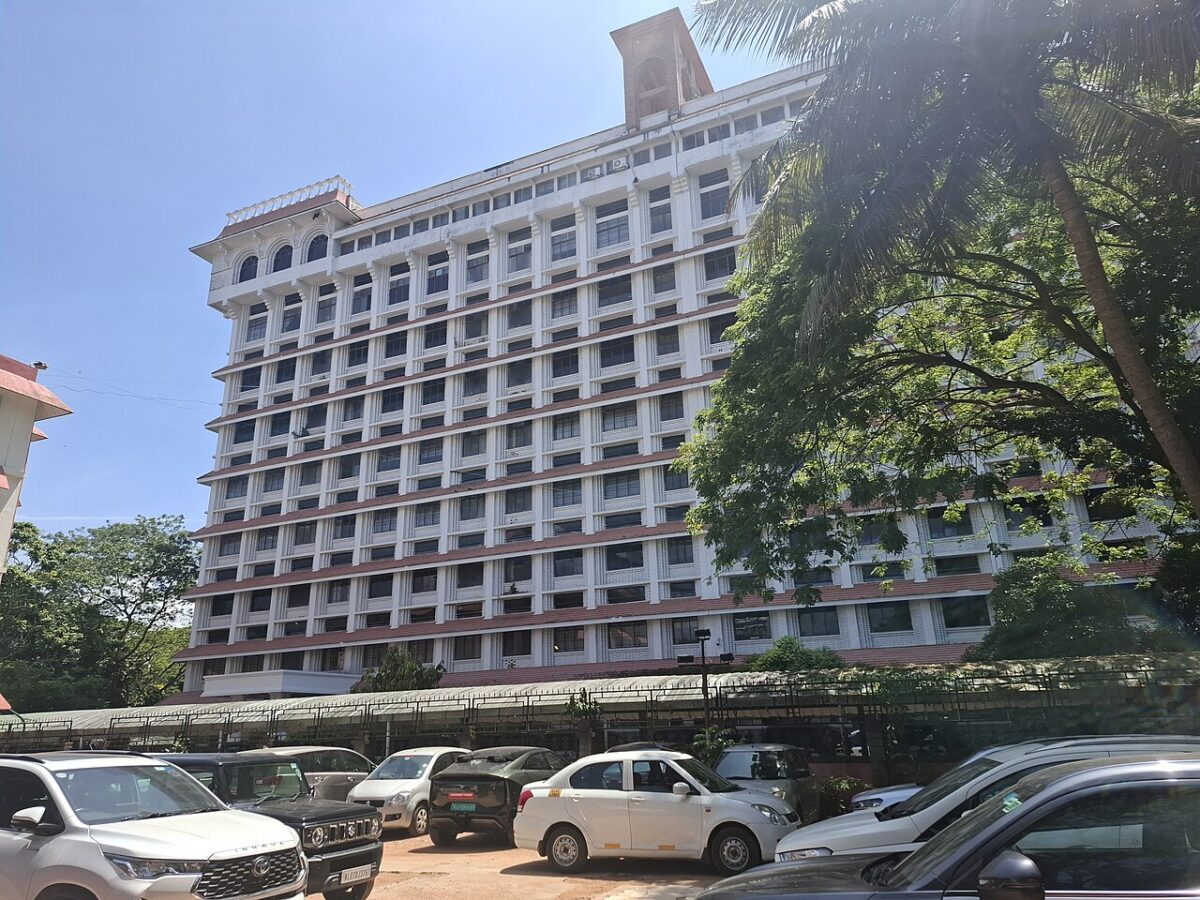
The Kerala High Court on Wednesday, November 25, closed proceedings against Home Minister Ramesh Chennithala in the Titanium case, a corruption case over a ₹256 crore effluent treatment project at the state-run Travancore Titanium Products in Thiruvananthapuram. The Central Bureau of Investigation (CBI) told Justice C Jayachandran that it had not found enough material to prosecute, LiveLaw reported.
The agency said it had filed a report before the competent special court asking for the case to be closed. LiveLaw called it a refer report; news agency IANS and The South First described it as a closure report. Chennithala’s counsel then told the court that his 2014 petition seeking to quash the criminal proceedings would not be pressed, and the court dismissed it on that basis. LiveLaw said the detailed order was still awaited. Onmanorama reported the hearing in the same terms.
Chennithala says the Left used the Titanium case against him
Chennithala welcomed the outcome. “There was nothing in this case, but the Left used it to politically target us, and now the truth has come out,” he said, according to IANS.
He said he had been president of the Kerala Pradesh Congress Committee (KPCC) at the time of the alleged irregularities and had no role in government files or administrative decisions, The South First reported. None of the reports carried a response from the CPI(M), which made the case a political issue during the 2011-16 UDF government.
Contracts for a pollution control plant are at the heart of the case
The case concerns a pollution abatement and capacity expansion project at Travancore Titanium Products, a state public sector undertaking. The company brought in Metallurgical and Engineering Consultants (India) Ltd, or MECON, a central public sector enterprise under the Union Ministry of Steel, as project consultant.
The allegation is that senior company officials conspired to hand MECON the job without a proper ground study, without inviting tenders and without the required sanctions. Officials are said to have gained financially, while the company suffered heavy losses and got nothing in return.
Machinery for the effluent treatment plant was bought from companies in Britain and Finland under contracts awarded without a global tender, according to the allegations. IANS dates the deals to 2004-06. Former Chief Minister Oommen Chandy, who was in office when the project began, and former Industries Minister V K Ebrahim Kunju were also named in the case.
A vigilance inquiry stalled before the CBI took over
The Vigilance and Anti-Corruption Bureau (VACB) investigated the case first. In August 2014, after a vigilance court rejected a VACB report on the contract, Pinarayi Vijayan, then CPI(M) state secretary, demanded a CBI investigation. “The Titanium case should be investigated by CBI and should be monitored by court,” he said at the time, Madhyamam reported. Chandy said he would not resign and was ready to face any inquiry. Chennithala moved the High Court against the proceedings the same year.
The vigilance inquiry then made little headway. In 2023, Justice K Babu of the High Court directed the Union government to hand the case to the CBI, on a petition filed by S Jayan. He found the VACB investigation “at a standstill” and said the state agency was not equipped to deal with the case’s interstate and international dimensions. Its attempts to get details of the foreign supplies through Interpol had gone nowhere, LiveLaw reported in November that year. The court gave the CBI six months to finish its work.
What happens next in the Titanium case
The CBI’s report now lies before the special court. The reports on Wednesday’s hearing did not say whether the closure also covers Oommen Chandy, Ebrahim Kunju or the company officials named in the case. The High Court’s decision dealt only with Chennithala’s own petition, listed as Ramesh Chennithala v State of Kerala.
For Chennithala, who holds the Home portfolio in Chief Minister V D Satheesan’s government, the closure removes a case that has hung over him for more than a decade, since he first challenged the proceedings in 2014.
Also read: Crime Branch to probe complaint over PSC Sanskrit teacher appointments