
The United States has proposed a tariff of up to 25% on goods from India after ruling that Indian industrial policies feed global excess capacity in manufacturing. The Office of the US Trade Representative (USTR) announced the decision in Washington on Wednesday, November 25. The proposed US tariff on India would drop to 17% if New Delhi signs a reciprocal trade agreement that meets American concerns. Cashew, pepper, cardamom, tea, coffee and natural rubber are on the proposed exemption list. Seafood and coir products are not.
India is one of 14 economies named in the USTR determinations, which close investigations opened under Section 301 of the Trade Act of 1974 on March 11. The others are China, the European Union, Japan, South Korea, Taiwan, Singapore, Switzerland, Indonesia, Malaysia, Cambodia, Thailand, Vietnam and Bangladesh. Mexico and Norway were also investigated, but USTR made no finding against them.
No tariff takes effect yet. USTR describes every rate as one it would “consider” applying, and the public now has six weeks to respond.
Washington names four Indian sectors
The USTR finding lists five Indian practices it calls unreasonable: government plans to expand manufacturing, weak labour protections, financial repression, long-standing barriers to market access, and a failure to curb excess capacity, including through imports and investment from non-market economies. It names four sectors: pharmaceuticals and medical devices, steel, solar equipment, and information and communications technology.
The India notice puts Indian solar module capacity at about 140 to 160 gigawatts, against domestic demand of 40 to 50 gigawatts a year. It calls the US India’s biggest export market for manufactured goods, larger than the next four combined, and says roughly a third of India’s pharmaceutical exports go to American buyers.
US Trade Representative Jamieson Greer said many trading partners had “adopted industrial strategies built on targeting manufacturing, wage and labor suppression, financial and other support, non-market economy inputs, and other market distorting practices”. Statements at the G7, G20 and the WTO had changed nothing, he said, so “President Trump is proposing to take action to bring about the elimination of these unfair acts”.
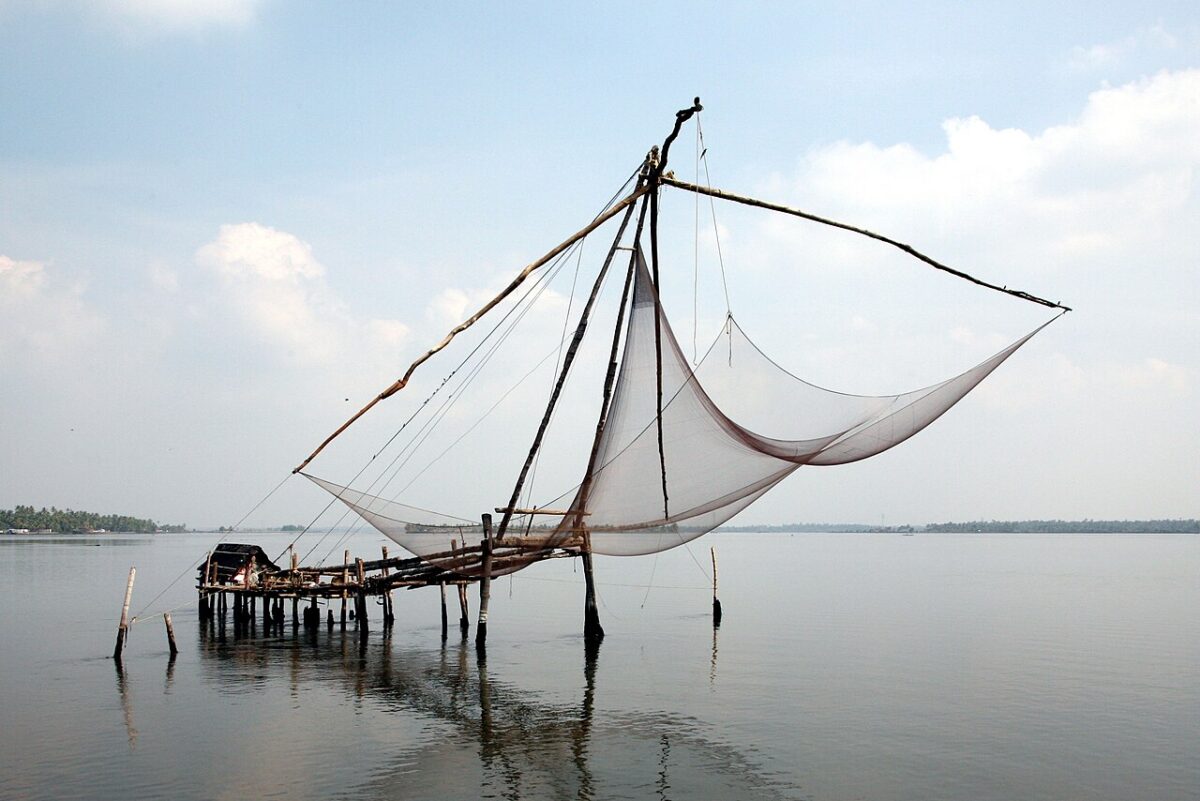
The US tariff on India spares Kerala’s spices and cashew
The proposed US tariff on India would apply to all Indian goods, with three sets of exceptions. The first covers goods already subject to separate US national-security duties under Section 232: steel, aluminium, copper, cars and their parts, trucks, wood products, patented medicines and semiconductors. The second covers books and other informational material, donations and accompanied baggage.
The third is a long annex of raw materials and goods the US does not produce in enough quantity. Several crops grown in Kerala are on it. The annex lists cashew nuts, pepper, cardamom, ginger, turmeric, tea, coffee, coconuts, coconut oil and natural rubber.
Seafood is a different matter. The annex has no entries in the tariff chapter for fish and crustaceans, so shrimp and other seafood shipped from India would be covered if the plan goes ahead. Coir fibre, coir yarn and coir mats are also missing from the list.
India argued it has no excess capacity
USTR held consultations with India on May 14, but they did not settle the dispute, the notice says. In written comments, the Indian government argued that its manufacturing, including solar and steel, serves domestic demand and does not create structural excess capacity. It said its Production Linked Incentive schemes are tied to self-reliance goals. India also asked that any new duty take account of existing US tariffs and of the 17% rate that would follow a trade deal.
India is one of only three economies offered a lower rate in exchange for a deal. Vietnam faces up to 35%, or 20% with an agreement, and Singapore up to 20%, or 10%. The EU, Japan and South Korea face up to 15%, Bangladesh and Thailand up to 18%, and China up to 20% on most goods.
Exporters have until January 5 to respond
Written comments and requests to speak at the hearing are due by January 5, 2027, through the USTR portal at comments.ustr.gov, under docket USTR-2026-0731 for India. The public hearing opens at 10 am on January 25, 2027, at the US International Trade Commission in Washington. USTR has asked for views on which products should be kept in or removed from the action, so Indian exporters and their American buyers can ask for specific goods, such as seafood, to be spared.
The full USTR report on India sets out the evidence behind the finding.
Also read: US may announce new tariffs on India and 15 other economies this week, WSJ reports