
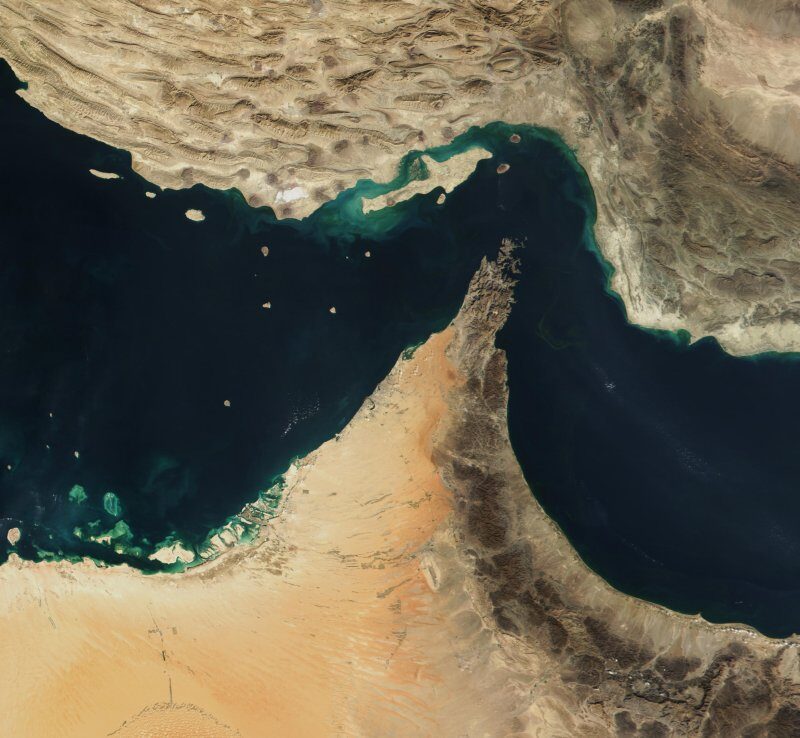
Three oil tankers suffered explosions and fires after striking naval mines in the Strait of Hormuz on Monday, November 23, Iran’s Islamic Revolutionary Guard Corps (IRGC) said in a statement carried by Iranian state media. US Central Command (CENTCOM) had not responded to the claim about the Strait of Hormuz tankers, The Jerusalem Post reported.
According to the statement, published by the state news agency IRNA, the tankers were being escorted and protected by the US military when they were hit. The Guards said that protection had failed to prevent the blasts.
The IRGC said the strait was “not a place for testing unauthorized routes” and warned ship owners, captains and shipping companies that a US military escort was no substitute for obeying the directions of its Navy’s traffic control center. Vessels that ignored its warnings would be treated as working with hostile forces and dealt with firmly, it added.
Attacks on shipping around Hormuz at their highest since the war began
Reported attacks on ships in and around the Strait of Hormuz have risen to the highest level since the Iran war began in February, according to The Jerusalem Post, which cited a CNN report on Monday and said it had verified the underlying maritime data. More than 30 attacks were reported in October to the United Kingdom Maritime Trade Operations Centre (UKMTO), which is affiliated with Britain’s Royal Navy, in an area covering the strait, the Persian Gulf and the Gulf of Oman. At least 22 had been reported in November as of Sunday.
The UKMTO figures are likely to understate the real number, the Post said, because the centre counts only incidents verified through primary sources. Ships have been trying to get around both Iranian and US efforts to block the waterway, it added.
Oil prices slip despite the Hormuz threat
Oil prices kept falling on Tuesday, November 24, on signs of rising supply and a possible market surplus, even as risks to shipping in the strait persisted. Brent crude futures fell 66 cents, or 0.7%, to $88.71 a barrel by 6:10 am Saudi time, after posting their lowest close since August 31 on Monday, Reuters reported in a story carried by Arab News. US West Texas Intermediate crude slipped 60 cents, or 0.8%, to $79.57 a barrel after touching its lowest level since August 26 earlier in the session.
Analysts said better supply was weighing on prices but that the market remained fragile. Suvro Sarkar, head of energy research at DBS Bank, said a renewed rise in prices “cannot be ruled out” because US-Iran talks had made no progress and either side could at some point test the other’s resolve over the blockade of the strait.
Daniel Hynes, senior commodity strategist at ANZ, said in a client note that shipping logistics were still constrained and inventory buffers thin, according to the same Reuters report. Deutsche Bank said global observed liquids inventories rose by 52 million barrels in October.
The United States is also investigating whether Iran was involved in cyberattacks on as many as 50 energy tankers, Reuters said, citing a report in the Wall Street Journal that quoted US officials and others familiar with the matter.
What Strait of Hormuz tensions mean for Gulf residents
The strait links the Persian Gulf with the Gulf of Oman and the open sea, and ships sailing to or from ports inside the Persian Gulf must pass through it. Fuel prices, freight costs and travel plans across the region can shift quickly when incidents there escalate.
Seafarers on vessels in the area should follow the guidance of their employers, flag states and UKMTO. Residents of Gulf countries should rely on official advisories from their host governments and their own embassies rather than unverified reports on social media.
Also read: Trump says he is inclined to order Iran strikes after New Year if there is no deal